
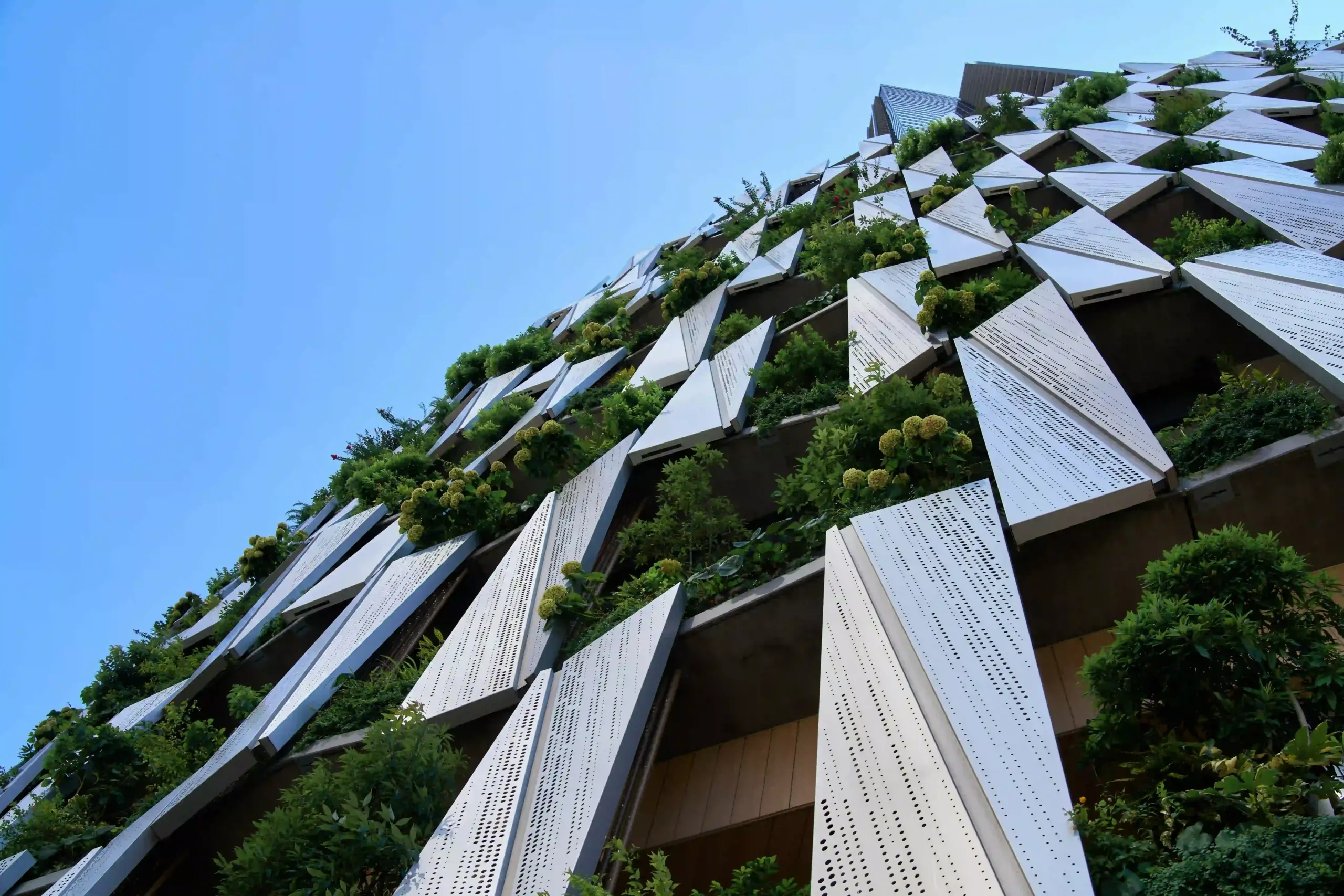
ESG by Design is a way of bringing environmental, social and governance criteria into the moment when decisions can still shape the project.
In real estate, many of the choices with the greatest impact happen early. Before the final image, before construction, before a solution begins to feel inevitable. This is when the programme is defined, the relationship with the existing asset is understood, the structural logic is tested, technical infrastructure is organised, the envelope is shaped, maintenance access is considered, and the future adaptability of the asset begins to take form.
Each of these decisions carries consequences. Some affect energy performance. Others influence comfort, safety, operation or durability. Others determine how clearly the process can be managed when change, time pressure or new constraints arise.
ESG by Design starts from this understanding. Environmental, social and governance responsibility becomes more meaningful when it is embedded in the way a project is conceived, coordinated and delivered.
When the project can still guide the outcome
At the beginning, there is still room to understand. A building can be read before it is transformed. A site strategy can be tested before it is fixed. A technical solution can be compared before it is specified. An uncertainty can be treated as a decision to be managed, instead of returning later as a correction.
This moment is particularly important for investors and developers, because it connects intention with consequence. It allows a façade strategy to be understood not only as an architectural choice, but also as a decision about energy, comfort, maintenance and ageing. It shows how the location of a technical area can affect operation, safety and future replacement. It makes clear that the way a decision is documented can influence the ability to defend it, review it and adjust it throughout the process.
Sustainability enters here as a discipline of reading. It helps clarify what a decision solves today and what it will require tomorrow. It helps distinguish an immediate saving from a future weakness. It helps turn broad ambitions into criteria that can be tested, coordinated and followed through.
Design as a decision structure
Design, in this context, is understood in its broader sense: the ability to give structure to a response before it becomes definitive.A palavra design é aqui entendida no seu sentido mais amplo: a capacidade de dar estrutura a uma resposta antes de ela se tornar definitiva.
That structure begins with the questions that guide the project. What should be preserved? What needs to be confirmed? Which solutions offer greater durability? Which systems allow accessible maintenance? Which decisions reduce waste during construction and across the life of the asset? What impacts will be felt by users, neighbours, operators and construction teams?
These questions bring architecture, engineering and project management closer together. They place form in dialogue with performance. They place technical choices in dialogue with use. They place investment in dialogue with the life cycle of the asset.
An environmental principle gains consequence when it reaches the construction solution, the detail, the specification and the site. A social intention gains consistency when it becomes thermal and acoustic comfort, daylight, legibility, accessibility and reduced disruption during construction. A governance concern gains value when it organises responsibilities, records, risk, communication and change control.Um princípio ambiental ganha consequência quando chega à solução construtiva, ao detalhe, à especificação e à obra. Uma intenção social ganha consistência quando se traduz em conforto térmico e acústico, luz natural, legibilidade, acessibilidade e redução do impacto do processo construtivo. Uma preocupação de governance ganha valor quando organiza responsabilidades, registos, risco, comunicação e controlo de alterações.
The strength of the method lies in this continuity.

Decisions with more than one dimension
A technical decision rarely belongs to a single category.
Improving the building envelope may reduce energy use, but it also increases comfort, protects materials, influences operating costs and requires clear maintenance decisions. Preserving an existing structure may reduce material impact, but it also calls for technical assessment, heritage understanding, risk management and a construction sequence that respects the constraints of the asset. The organisation of access, circulation and technical zones influences inclusion, safety, operation and durability.
The same applies to construction. The way access, noise, dust, waste and temporary circulation are planned is part of the responsibility of the project. The completed building matters, but the process that makes it possible also leaves an impact.
This is why ESG by Design works best as an integrated practice. What matters is understanding how each criterion influences the decision, which alternatives were analysed, which risks were accepted and which conditions should be monitored over time.
Governance as process coherence
The environmental dimension is often the most visible. Materials, energy, water and carbon are concrete themes, increasingly measured and compared. Yet the ability to turn intention into built reality depends deeply on governance.
Governance is what keeps decisions legible as the process moves forward. It is present in the definition of responsibilities, the quality of documentation, transparent reporting, risk management and the discipline with which the evolution of the project is followed.
It is also a culture of technical responsibility. Knowing when a solution has enough evidence behind it. Knowing when a change needs to be assessed beyond what is visible in the drawing. Knowing how to record an assumption so that it is not lost when the interlocutor changes. Knowing how to maintain coherence when time pressure increases and complexity becomes more visible.
This dimension is discreet, but it sustains the value of the others. With clarity of process, environmental and social ambition gain a real capacity to reach the built asset.
From asset to life cycle
For investors and developers, ESG by Design is a way of reading the asset with greater depth.
A building carries previous decisions. Some are visible in its architecture. Others are hidden in technical systems, defects, incompatibilities, maintenance costs or limitations to future adaptation. Before acquiring, transforming or developing an asset, it is important to understand these layers.
Applying environmental, social and governance criteria from due diligence, feasibility studies or the earliest design decisions helps identify weaknesses, recognise opportunities and guide investment with greater clarity. It may mean preserving more. It may mean intervening more deeply where durability requires it. It may mean choosing a less obvious solution because it is more robust across the life cycle of the asset.
The value of this approach lies in the ability to decide with better evidence. Not to simplify complexity, but to make it legible.
An integrated practice
ESG by Design is a way of thinking and leading the project from the outset. It is present in the care with which an assumption is defined, in the moment when something is confirmed before moving forward, in the way a solution is coordinated and in the responsibility to understand the impact of each technical choice.
At COLUNA, this approach brings together architecture, engineering and project management to support clearer, more responsible and more durable decisions. Sustainability becomes part of the structure of the process.
A project with a future depends on the quality of the decisions it can sustain over time. ESG by Design is that discipline applied from the beginning, so that responsibility accompanies the way a building is conceived, built, used and transformed.
Related Articles
Sustainability as a Decision Criterion
Sustainability, when taken seriously, begins before it becomes a separate subject. It begins in the…
Read article