

There is an early moment in many projects when it becomes clear we are not discussing design. We are defining the ground on which design can happen.
That ground is not abstract. It is shaped by boundaries, expectations, and responsibility. Budget and time, place and the applicable planning framework, and what the client truly needs the project to be. When these boundaries arrive late, they are read as a brake. When they enter early, they help orient the work.
Feasibility is not just numbers
Budget and programme are the visible layer. Real feasibility includes uncertainty, sequence, and irreversible decisions taken at the right moment.
Some decisions close options: demolition can erase useful evidence, cutting an opening can change load paths, waterproofing becomes concealed and difficult to revisit. Some systems look fast on paper and, on site, reveal themselves to be rigid. When these decisions move forward without sufficient confirmation, the cost rarely appears as a single line item. It shows up as corrections, stoppages, and loss of momentum.
In existing buildings, this becomes clear quickly. The building responds when you open up and when you measure. Layers, junctions, services, and deformations appear that were not visible. Feasibility, here, is not only about closing a number. It is about ensuring the project can absorb what will emerge without losing direction.
There is also a practical reading, close to those who develop and manage investment. The issue is rarely a known difficulty. It is the difficulty discovered late, once the path is already committed. Feasibility is not about eliminating risk. It is about giving risk a place in the plan. It is about deciding early what must be decided early and delaying with intent what still has no stable basis.
Identity is not image
Identity is not style, not nostalgia, and not a set of elements kept to signal respect. Identity is continuity with criteria.
Identity may live in what is visible, but it almost always lives in what organises: the proportion of a space, the rhythm of openings, the way one enters, the relationship between rooms, the way light structures an interior. It also lives in the scale with which a building responds to the street and to its setting.
The difficult point is accepting that identity does not mean untouchability. Some projects are protected by keeping. Others are protected by transforming, as long as the transformation is legible and responsible. A space that cannot be used loses its future. And without a future, identity becomes memory.
In practice, identity needs to be defined early, but through a small number of anchors. If everything is essential, nothing guides. It is better to choose what cannot be lost and keep the rest available to respond to reality, without trivialising the outcome or freezing the process.
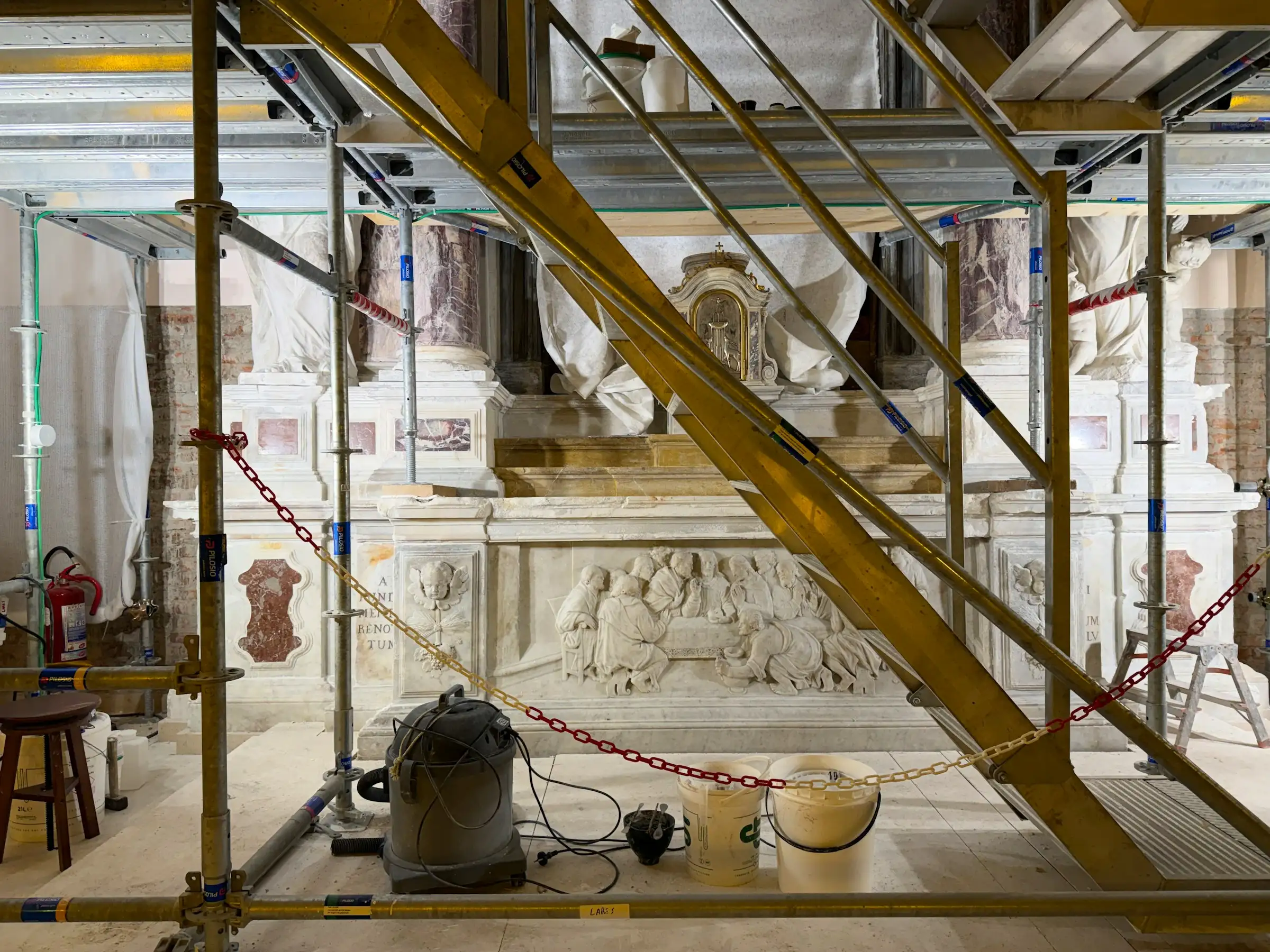
Compliance is not the enemy
When compliance arrives late, it is almost always read as a brake. When it enters early, it provides orientation.
Compliance is indispensable. Yet in many processes, the difference lies in how it is demonstrated. What exists must be identified with clarity. What is proposed must be legible in the drawings and documents. And the reason why the solution is acceptable must be technically supported. A well prepared submission is not an accessory. It is what allows a decision to be taken with confidence.
There are legal constraints that frequently run through a project and are worth recognising early. Easements, neighbour rights, condominium regimes, earlier titles with inconsistencies, poorly defined boundaries. Not as a parallel topic, but as part of the ground on which the project operates.
From the technical side, our work is to recognise early when a decision depends on legal framing and not only on design. In those cases, it makes sense to work with specialist lawyers, particularly in planning and urban law, to confirm assumptions and reduce ambiguity. Not to shift decisions into the legal sphere, but to ensure the project moves forward on solid ground.
Balance is not compromise, it is sequence
It is tempting to look for balance through successive concessions. In practice, this tends to produce a defensive and unclear whole. Balance gains a different quality when it depends less on giving up and more on sequence.
First, understand what actually exists, and confirm what needs confirmation. The survey must be reliable, the constructive reading honest, and the structure checked where necessary. Existing services must be understood. This is not bureaucracy. It prevents the project from being built on an assumption the building, the context, or the process cannot support.
Then, fix the few identity anchors that guide everything else. Not as discourse, but as criteria for decision making when conflicts arise.
In parallel, map compliance as a field of decisions. Where limits are rigid, where interpretation matters, and where the submission must be exemplary. Sometimes, an early conversation avoids months of uncertainty.
Only then does it make sense to close feasibility as a complete decision. Cost, time, risk, phasing, and construction sequence. At that stage, feasibility is no longer trying to rescue a design. It is defining the path.
The point of balance
There is no correct proportion between feasibility, identity, and compliance. There is a work of calibration that unfolds along the way, with firmness, as the project gains substance and the process takes shape.
At the start, what matters most is understanding where the limits sit and which decisions cannot be made on impulse. Three questions serve as a guide.
What can this project physically and structurally accommodate, without contradicting what exists and what is permitted?
What cannot be lost without the outcome becoming indifferent?
What is determinative in terms of compliance, and what requires interpretation, a well prepared submission, and technical justification, including constraints embedded in titles and property regimes?
When this work is done early, the project gains calm. Discussions stop being reactive. And identity stops being a promise and becomes a consequence. Not as an applied image, but as a grounded design, capable of elevating the spatial experience because it is born within the right boundaries.
In the end, this is what we look for: a project that is clear, governable, and consistent. A design that does not need to be justified after the fact, because it grows with place, budget, and compliance held in balance from the start, leaving room for identity to be whole, rather than sacrificed when everything costs more.